
Navigating the world of health and wellness can be overwhelming, especially when it comes to choosing the right professional to guide you on your journey. The terms “dietitian,” “nutritionist,” and “health coach” are often used interchangeably, but they have distinct roles, qualifications, and scopes of practice. Let’s break down what each of these professionals does and explore why working with a Registered Dietitian vs. Nutritionist might be the best choice for your health needs.



What is a Dietitian?
A dietitian is a healthcare professional who specializes in the science of nutrition and dietetics. Registered Dietitians (RDs) or Registered Dietitian Nutritionists (RDNs) have completed rigorous educational and professional requirements, including:
A Bachelor’s Degree: Typically in nutrition, dietetics, or a related science field from an accredited university.
Supervised Practice: At least 1,200 hours of supervised practice through an accredited dietetic internship program.
National Examination: Passing a national examination administered by the Commission on Dietetic Registration (CDR).
Continuing Education: Maintaining their credential through ongoing education and professional development.
Dietitians are qualified to work in a variety of settings, including hospitals, clinics, community health programs, schools, and private practice. They provide medical nutrition therapy, develop personalized nutrition plans, and offer evidence-based dietary advice to manage and prevent chronic diseases.
What is a Nutritionist?
The term “nutritionist” can vary widely in meaning and qualifications. Unlike dietitians, nutritionists do not have a standardized national credential or licensing requirements in many regions. Some nutritionists may have advanced degrees and extensive training in nutrition science, while others might have minimal formal education or certification.
In some countries and states, anyone can call themselves a nutritionist regardless of their level of education or experience. However, in places where the title is regulated, such as certain Canadian provinces and U.S. states, nutritionists must meet specific educational and professional standards.
What is a Health Coach?
Health coaches focus on helping clients achieve their wellness goals through behavior change, motivation, and support. They may address various aspects of health, including diet, exercise, stress management, and lifestyle changes. Health coaches often work one-on-one with clients to set goals, develop action plans, and provide accountability.
The training and certification requirements for health coaches vary significantly. Some health coaches are certified through accredited programs and have a solid foundation in health and wellness principles, while others may have less formal training.
Key Differences Between Dietitians, Nutritionists, and Health Coaches
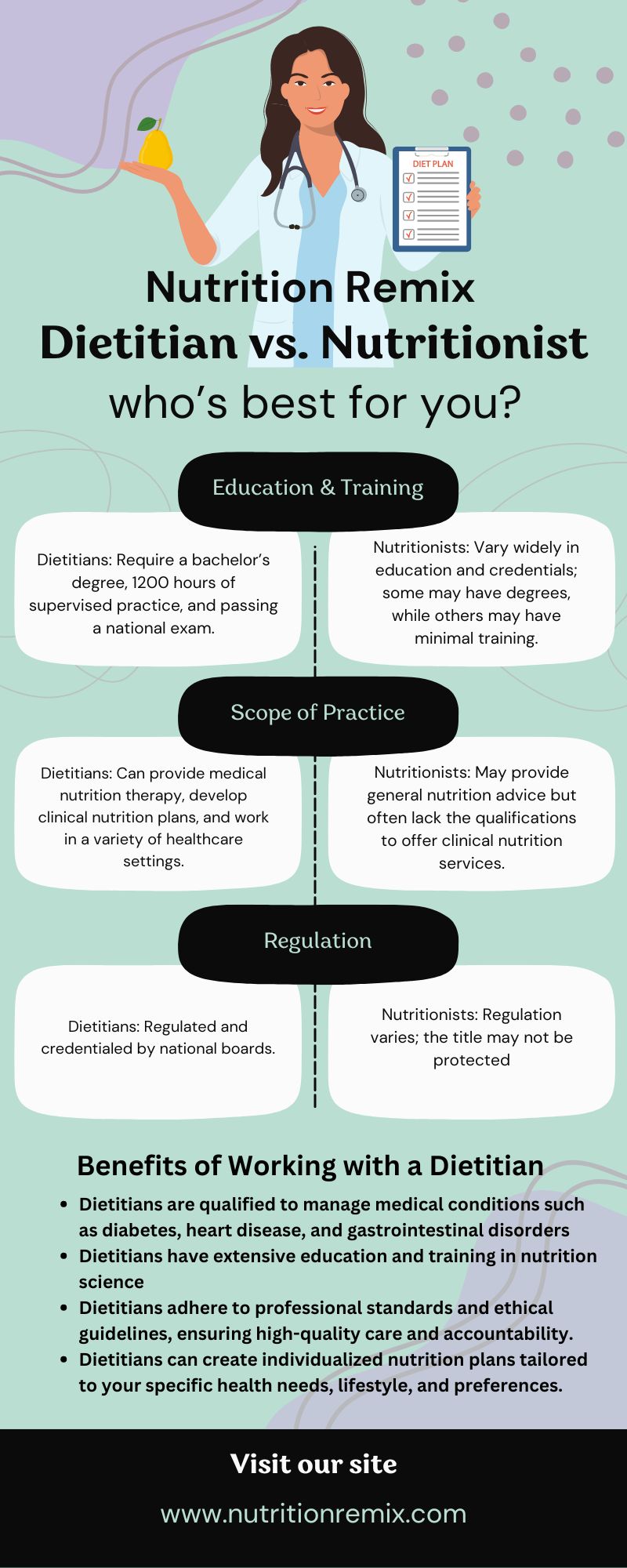
Education and Training:
Dietitians: Require a bachelor’s degree, supervised practice, and passing a national exam.
Nutritionists: Vary widely in education and credentials; some have advanced degrees, while others may have minimal formal training.
Health Coaches: Training varies; some have certifications from accredited programs, while others may have less formal education.
Scope of Practice:
Dietitians: Can provide medical nutrition therapy, develop clinical nutrition plans, and work in a variety of healthcare settings.
Nutritionists: May provide general nutrition advice but often lack the qualifications to offer clinical nutrition services.
Health Coaches: Focus on behavior change, motivation, and overall wellness but typically do not provide clinical nutrition therapy.
Regulation:
Dietitians: Regulated and credentialed by national boards.
Nutritionists: Regulation varies; the title may not be protected in some regions.
Health Coaches: Generally less regulated, with wide variability in training and certification.
Benefits of Working with a Dietitian
Choosing to work with a Registered Dietitian offers several advantages:
Expertise and Credibility: Dietitians have extensive education and training in nutrition science, ensuring that their advice is based on the latest research and evidence-based practices.
Medical Nutrition Therapy: Dietitians are qualified to provide therapeutic diets and manage medical conditions such as diabetes, heart disease, and gastrointestinal disorders through nutrition.
Personalized Nutrition Plans: Dietitians can create individualized nutrition plans tailored to your specific health needs, lifestyle, and preferences.
Professional Accountability: Dietitians adhere to professional standards and ethical guidelines, ensuring high-quality care and accountability.
Comprehensive Care: Dietitians can work in conjunction with other healthcare providers to offer a holistic approach to your health and wellness.
Conclusion
While nutritionists and health coaches can offer valuable support and guidance, the comprehensive training, expertise, and credibility of a Registered Dietitian make them the gold standard for nutrition care. Whether you’re managing a chronic condition, seeking to improve your diet, or looking to achieve specific health goals, partnering with a dietitian can provide the expert guidance and support you need to succeed.
If you’re ready to take control of your health with the help of a skilled professional, consider reaching out to a Registered Dietitian like Karen at Nutrition Remix. With the right expertise and personalized care, you can achieve your health and wellness goals.