
The holiday season is a time for joy, connection, and celebration—but it can also be overwhelming when it comes to food and health. With countless gatherings, indulgent treats, and societal pressures to “start fresh” in the new year, it’s easy to feel caught between enjoying the moment and maintaining your health goals. The good news? You can find a balance. Here’s how to stay mindful during the holidays and set realistic, sustainable health goals after the festivities wind down.
 5 Tips for a Healthy Holiday Season
1. Practice Mindful Eating
Focus on the experience of eating by slowing down, savoring every bite, and enjoying the flavors and textures. Pay attention to hunger and fullness cues to avoid overeating.
2. Balance Indulgence with Nourishment
Enjoy your favorite holiday treats without guilt, and aim to balance them with nutrient-dense meals. For example, pair a rich dessert with a lighter, veggie-packed main course earlier in the day.
3. Stay Active in Fun Ways
Incorporate movement into your holiday activities, like a family walk after a meal, dancing at a party, or playing games that get you moving. Exercise helps you feel energized and reduces stress.
4. Set Realistic Boundaries
Say yes to the foods and traditions you truly enjoy, and don’t feel pressured to eat or drink everything offered. Politely decline what doesn’t excite you, and focus on the experiences that bring joy.
5. Prioritize Sleep and Hydration
With busy schedules and festive drinks, it’s easy to forget about rest and water intake. Stay hydrated to support digestion and energy levels, and aim for 7-8 hours of sleep to keep stress in check.
Holiday meals and treats are often associated with guilt, but it doesn’t have to be this way. Remember: one meal or dessert won’t derail your health goals. The key is embracing balance and moderation.
- Reframe Your Mindset: Food is more than just fuel; it’s part of our culture, traditions, and memories. Allow yourself to enjoy seasonal treats without labeling them as “good” or “bad.” To help with this, try using positive affirmations such as: “I am allowed to enjoy all foods in moderation,” “One meal does not define my health,” or “I am nourishing my body and mind during this special season.”
- Focus on the Big Picture: Your overall habits matter more than any single meal. One indulgent evening won’t outweigh weeks or months of balanced eating. If you feel like the whole holiday season has thrown off your diet, remind yourself that progress isn’t about perfection. Reflect on the habits you’ve built over time and recognize that one season doesn’t define your overall health.
- Practice Self-Compassion: If you feel you’ve overindulged, avoid punishing yourself. Instead, focus on how you can support your body—like hydrating, moving gently, and eating nutrient-dense foods at your next meal.
Setting Realistic Health Goals After the Holidays
When January arrives, it’s tempting to dive into extreme diets or overhaul your entire routine. However, drastic changes are rarely sustainable. Instead, focus on small, meaningful shifts that align with your lifestyle and long-term goals.
Why Small Changes Matter:
They’re easier to maintain and less overwhelming.
Small wins build confidence and momentum.
They create lasting habits that lead to bigger transformations.
Examples of Realistic Goals:
Drink an extra glass of water each day.
Add one serving of vegetables to your meals.
Take a 10-minute walk after dinner.
Prioritize 7-8 hours of sleep most nights.
Plan one balanced, home-cooked meal per week.
Over time, these small actions compound into significant improvements in your health and well-being.
Final Thoughts
The holidays don’t have to be a season of stress around food or fitness. By staying mindful, letting go of guilt, and setting realistic goals, you can enjoy the festivities while laying the foundation for a healthy, balanced new year. Remember, your health journey is a marathon, not a sprint. Small, intentional changes lead to sustainable results—and that’s something worth celebrating.
Healthy Holiday Recipe: Festive Roasted Veggie and Quinoa Salad
This colorful, nutrient-packed dish is perfect for any holiday table. It’s full of fiber, protein, and flavor—and it’s easy to prepare!
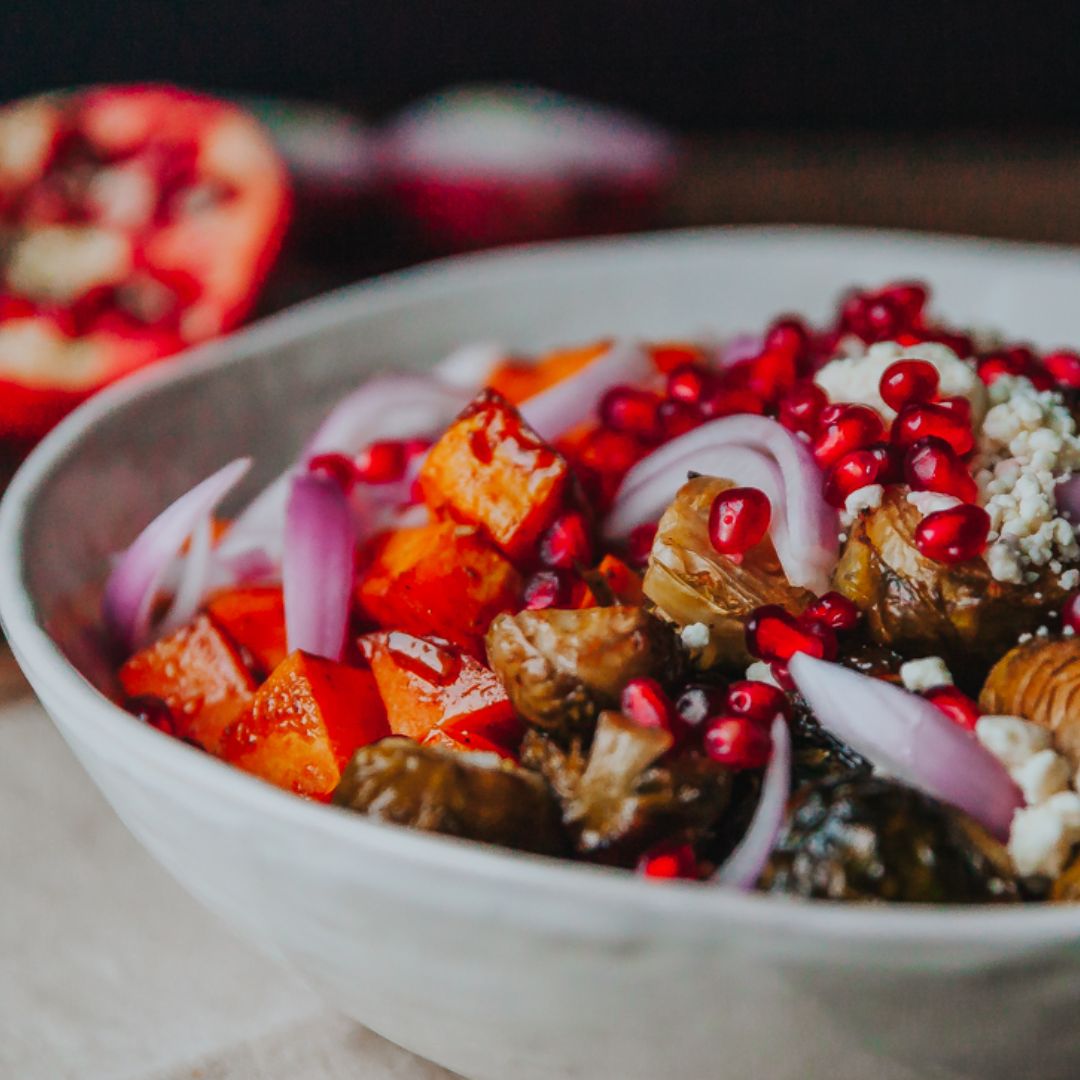 Inspiration: https://ayokitchen.com/quinoa-pomegranate-salad/
Ingredients:
3 cups cooked Quinoa
1 cup diced sweet potato (about 1 large potato)
2 cups Brussels sprouts, halved
½ of a red onion, thinly sliced
2 tablespoons olive oil
½ teaspoon salt
½ teaspoon black pepper
1 cup pomegranate seeds
½ cup chopped pecans (optional)
1 cup crumbled feta cheese (optional)
Dressing:
2 Tablespoons olive oil
2 Tablespoons balsamic vinegar
2 tablespoons Dijon mustard
2 tablespoons honey or maple syrup
Juice from 1 lemon
1 tsp garlic powder
salt & pepper to taste
Instructions:
Preheat your oven to 400°F (200°C). Toss sweet potato, Brussels sprouts, and red onion with olive oil, salt, and pepper. Spread on a baking sheet and roast for 20-25 minutes, stirring halfway through.
While the veggies roast, cook quinoa: Combine 1 cup dry quinoa with 2 cups water or broth in a medium pot. Bring to a boil, reduce heat to low, cover, and simmer for 15 minutes or until water is absorbed. Fluff with a fork.
Prepare the dressing: Whisk lemon juice, garlic powder, olive oil, balsamic vinegar, Dijon mustard, and honey in a small bowl.
In a large bowl, combine roasted veggies, quinoa, pomegranate seeds, and pecans. Drizzle with dressing and toss to combine. Top with feta if desired. Serve warm or at room temperature.